Why Your Website Still Won’t Rank: The Unfair Truth About Google’s System
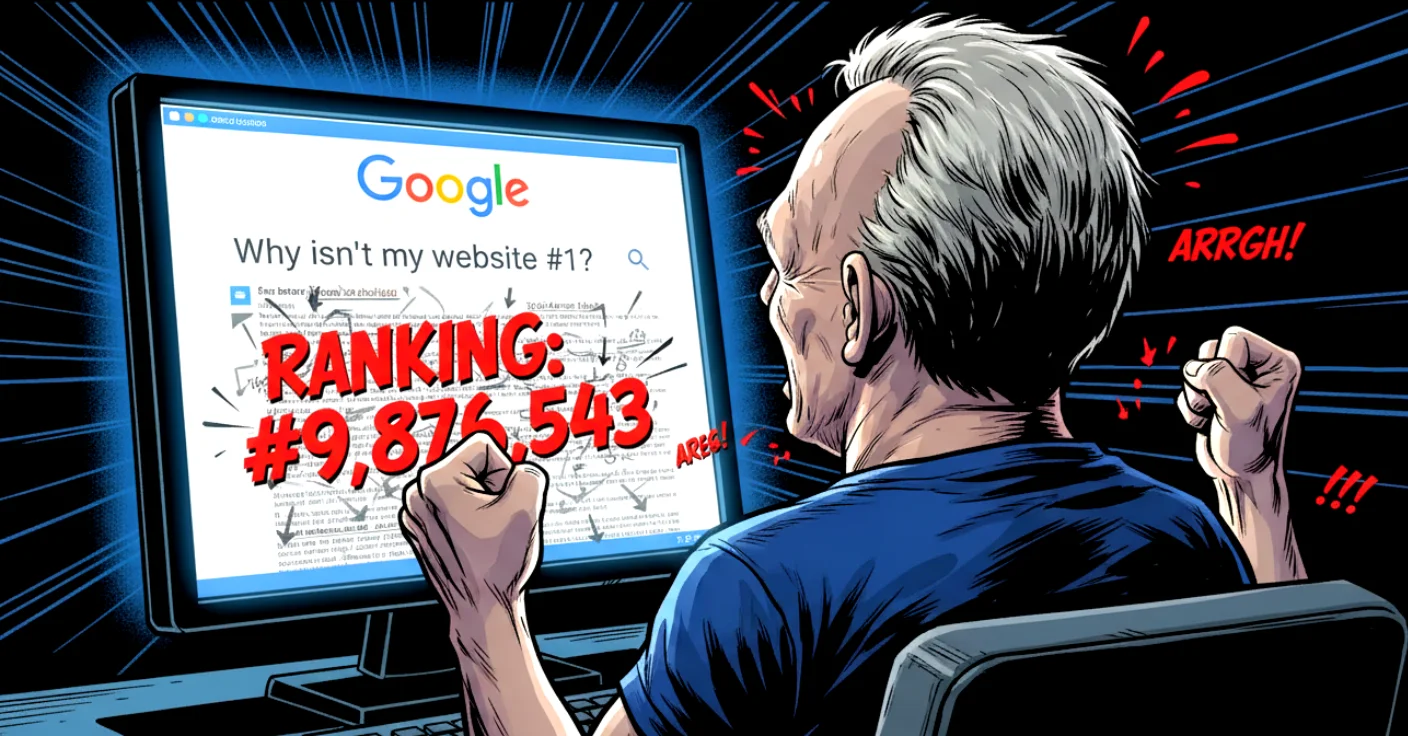
Launching a website today feels a bit like opening a charming little bookshop next door to a 20‑storey Amazon megastore. You can have beautiful shelves, helpful content, and a passion for your niche, yet Google still ushers everyone straight past your door and into the giant’s. If you’ve spent months — or even years — creating a genuinely useful website but barely receive a trickle of organic traffic, you’re not alone. And no, you haven’t done anything wrong. The problem lies with Google’s ranking system itself, which remains stubbornly primitive despite all the marketing fluff about “AI search”, “helpful content”, and “quality signals”.
The uncomfortable truth is simple: Google still relies heavily on backlinks, a system so old and creaky it should probably come with a health warning. The more backlinks a site has, the more “trusted” Google considers it — and the higher it ranks. It’s a popularity contest dressed up as sophisticated technology. And like most popularity contests, it’s deeply unfair.
This article explores why your website struggles to rank, why Google’s system disadvantages independent creators, and what you can realistically do in a landscape dominated by big brands and ancient domains.
The Myth of Modern Search
Google loves to present itself as a cutting‑edge, AI‑powered oracle capable of understanding nuance, intent, and quality. In reality, its core ranking mechanism still resembles something invented during the dial‑up era: counting links.
Backlinks act as votes. The more votes you have, the more Google assumes people trust you. It’s a simplistic idea that made sense when the web was small and personal blogs linked to each other like friendly neighbours. Today, the web is dominated by corporations, content farms, and SEO agencies who treat backlinks as a commodity. The result? Big brands accumulate links effortlessly, while small websites struggle to earn even a handful.
Google insists it uses hundreds of ranking factors, but backlinks remain the heavyweight champion. If your site has few or none, you’re effectively invisible — no matter how good your content is.
Why Backlinks Make the System Unfair
Backlinks sound democratic in theory, but in practice they create a two‑tier internet.
1. Big brands get backlinks without trying
Large companies naturally attract links from news outlets, social media, forums, and other websites simply because they’re well‑known. They don’t need to ask for links, build relationships, or create extraordinary content. Their brand alone does the work.
2. Small websites must fight for every link
Independent creators often produce better content than big brands, yet struggle to earn links because:
- People rarely link to sites they’ve never heard of.
- Most blogs no longer exist or no longer link out.
- Many platforms automatically add “nofollow” attributes, making links worthless.
- Outreach emails are ignored or treated as spam.
It’s like trying to win a marathon while the big brands start on mile 20.
3. Google treats backlinks as gospel
Despite all its talk about “quality”, Google still treats backlinks as the most reliable indicator of trust. This means:
- A mediocre article on a big site outranks a brilliant article on a small site.
- A 15‑year‑old domain with outdated content outranks a new site with fresh insights.
- A brand with millions of backlinks can break Google’s own rules and still rank.
If this feels unfair, that’s because it is.
The Age Factor: Another Primitive Ranking Signal
Alongside backlinks, Google heavily favours domain age. Older websites are seen as more trustworthy, even if their content is stale, outdated, or written when flip phones were still fashionable.
This creates a bizarre situation where:
- New websites must work ten times harder to be noticed.
- Old websites can coast on their history.
- Google’s results often feel stuck in the past.
It’s a bit like asking your grandad for tech advice — charming, but not always helpful.
The Death of the Independent Web
There was a time when personal blogs, niche hobby sites, and small independent publishers thrived. They ranked well, attracted loyal audiences, and contributed to a diverse, vibrant web. Today, most of them have vanished from Google’s search results.
Search for almost any popular topic and you’ll see:
- Big brands
- Large media outlets
- Massive e‑commerce sites
- Corporate blogs
- AI‑generated content farms
Small websites appear only if they’ve been around for years or cover obscure topics nobody else has touched.
Google claims this shift is about “quality”, but the reality is simpler: big brands have more backlinks, and Google’s primitive system rewards them.
Algorithm Updates That Hurt Small Websites
Over the years, Google has introduced updates designed to combat spam, low‑quality content, and manipulative SEO tactics. While these updates were necessary, they often hit small websites hardest.
Nofollow links
When platforms introduced “nofollow” attributes, millions of legitimate backlinks instantly became worthless. Small websites lost their only easy way to earn links.
Penguin
This update targeted unnatural backlinks. Unfortunately, many small websites were penalised for harmless directory submissions or old links they couldn’t control.
Panda
This update targeted thin or duplicate content. While it improved search quality, it also wiped out countless small sites that had minor issues.
Helpful Content & Core Updates
Recent updates have heavily favoured large, authoritative brands. Many independent websites saw traffic collapse overnight, even when their content was genuinely helpful.
Google rarely explains penalties clearly, and recovery is often impossible. For many small creators, the only realistic option is to abandon the domain and start again — a demoralising cycle.
Double Standards: Why Big Brands Get Away With Everything
Google’s guidelines warn against manipulative linking, thin content, duplicate pages, and other bad practices. Yet many large websites break these rules daily without consequences.
Examples include:
- Massive networks linking between their own sites.
- E‑commerce giants using thin product descriptions.
- Media outlets rewriting the same article dozens of times.
- Corporations stuffing keywords into pages because they know they won’t be penalised.
If a small website tried any of this, Google would bury it instantly. But big brands are considered “trusted”, so they get a free pass.
Google claims this isn’t favouritism — it’s “quality assurance”. But when the biggest advertisers and most recognisable brands consistently rank at the top, it’s hard not to raise an eyebrow.
Why Quality Content Alone Isn’t Enough
There’s a persistent myth that “if you write great content, Google will reward you”. It’s a lovely idea, but unfortunately it’s not true.
Quality content is essential, but it’s not enough to rank without backlinks. You can write the most insightful, original, beautifully crafted article in your niche, but if nobody links to it, Google won’t consider it trustworthy.
This creates a chicken‑and‑egg problem:
- You need traffic to earn backlinks.
- You need backlinks to earn traffic.
- You need visibility to earn both.
It’s a loop that small websites struggle to escape.
Why Earning Backlinks Naturally Is Harder Than Ever
Google wants backlinks to be earned naturally, but the modern web makes this nearly impossible.
Blogs no longer link out
Most personal blogs have disappeared, and those that remain rarely link externally.
Social media dominates attention
People share content on social platforms instead of linking to it.
Corporate sites don’t link to small sites
Big brands avoid linking to independent websites unless absolutely necessary.
Forums and communities have declined
Many old forums are gone, and modern platforms like Reddit often nofollow links.
AI content floods the web
Automated content farms produce endless articles, drowning out independent voices.
Natural backlinks still happen, but they’re rare — and usually go to big brands.
Why Google’s System Is Bad for Users Too
This isn’t just unfair for creators — it’s bad for users.
When Google favours big brands:
- Search results become repetitive.
- Niche expertise gets buried.
- Independent voices disappear.
- Innovation slows down.
- The web becomes homogenised.
Users end up reading the same recycled content from the same handful of corporations, even when better information exists elsewhere.
What You Can Realistically Do
Despite the unfairness, there are still ways to build a successful website — but they require strategy, patience, and realistic expectations.
1. Choose a niche that isn’t saturated
Avoid competing with big brands. Focus on topics they haven’t covered deeply.
2. Create genuinely useful content
Quality won’t guarantee rankings, but it will help you build trust with readers.
3. Promote your site outside Google
Use social media, newsletters, communities, and collaborations.
4. Build relationships, not backlinks
Real connections often lead to natural mentions.
5. Consider non‑English markets
Smaller languages often have far less competition.
6. Accept that growth takes time
New websites rarely gain traction quickly. Persistence matters.
7. Diversify traffic sources
Relying solely on Google is risky. Use multiple channels.
The Hard Truth
Google’s ranking system is outdated, unfair, and heavily biased toward big brands. Despite all its talk of AI and innovation, it still relies on a primitive method: counting backlinks. The more backlinks a site has, the more likely Google is to rank it — regardless of content quality.
This system punishes small creators, stifles independent voices, and makes it incredibly difficult for new websites to gain visibility. But while the landscape is challenging, it’s not hopeless. With smart niche selection, consistent content, and diversified promotion, you can still build an audience — even if Google isn’t your biggest fan.
Conclusion
If your website isn’t ranking, don’t blame yourself. Blame the outdated system that rewards size, age, and backlinks over genuine quality. Google has unintentionally made the web less diverse, less independent, and less fair. But that doesn’t mean you should give up. Build something meaningful, promote it widely, and let time do its work. The independent web may be struggling, but it isn’t dead — and your voice still matters.