The Complete Rubbish Currys Tried to Sell Me When All I Wanted Was a Laptop
Buying a laptop should be one of the simplest shopping experiences imaginable. You choose the model you want, pay for it, and take it home. That's exactly what I expected when I visited Currys in 2018 to collect a laptop I'd already reserved online.
Instead, what should have been a five-minute collection turned into a lengthy, uncomfortable sales process that left such a bad impression that, eight years later, I still haven't bought anything from Currys again.
Before I go any further, it's important to say that this is my personal experience from 2018. I'm not suggesting every Currys store operates this way, and things may well have changed since then. However, this is exactly what happened to me, and it's the reason I've chosen to spend my money elsewhere ever since.
Why I Was Buying a New Laptop
At the time, our family laptop was finally on its last legs. It had become painfully slow, the screen flickered constantly, and even basic tasks were turning into a chore.
I wasn't looking for anything special. I simply needed a reliable, affordable laptop for everyday jobs such as web browsing, email, online banking and the occasional document.
After a bit of research, I found a budget laptop on the Currys website priced at £330, reduced from £400. The product page showed limited stock, so I reserved one online straight away.
Because there was no option to pay in advance, I had to collect it in-store. I assumed the laptop would be waiting behind the counter with my name on it and that I'd be in and out within minutes.
I couldn't have been more wrong.
The Collection That Wasn't Really a Collection
When I arrived at the store, I went directly to the collection desk and gave my reservation details.
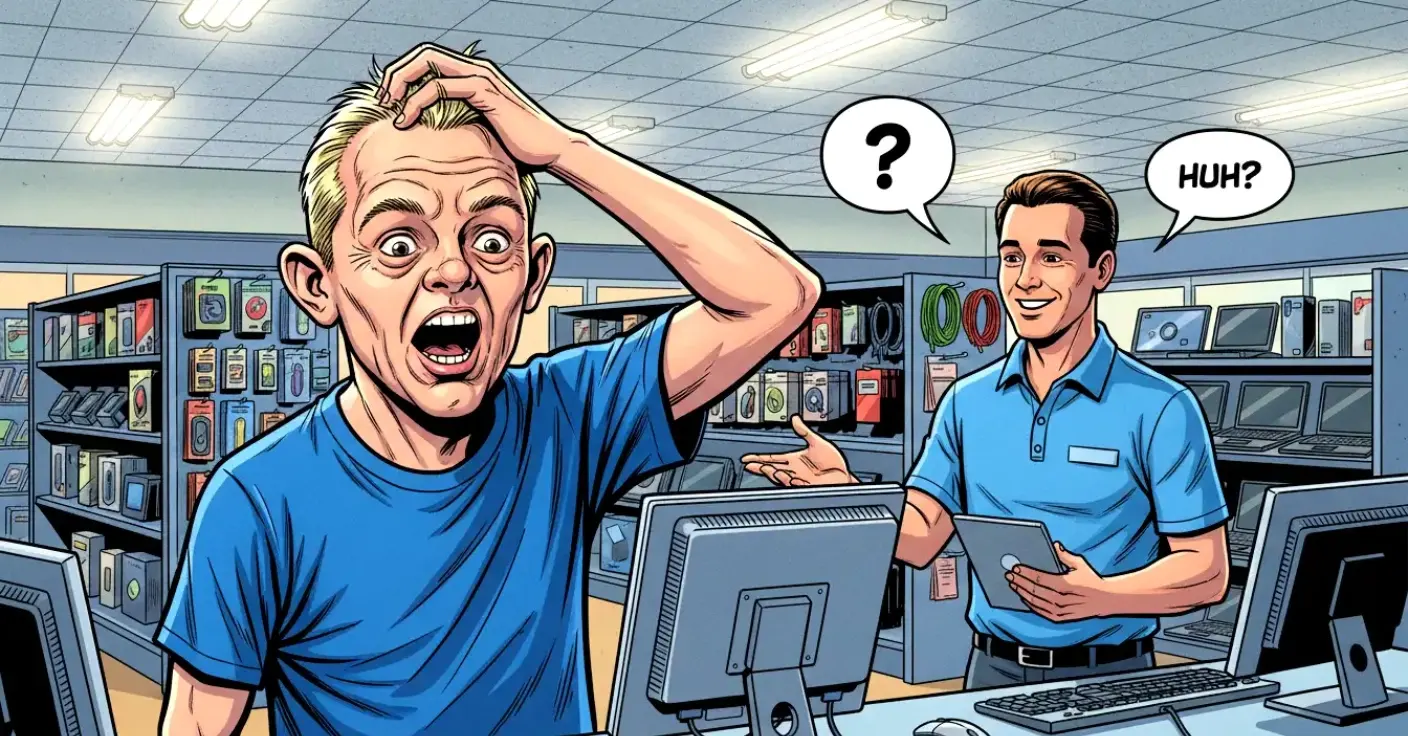
Rather than simply retrieving the laptop, the member of staff called over someone from the computing department. I was then taken back to the display area where the laptop was on show.
The saleswoman immediately pointed out that the laptop had been reduced and that I was getting a great deal, allegedly at least. She then asked what I planned to use it for.
I explained that I only needed it for basic tasks. In my mind, that should have settled the matter. I had already chosen the laptop, reserved it online and travelled to the store specifically to collect it.
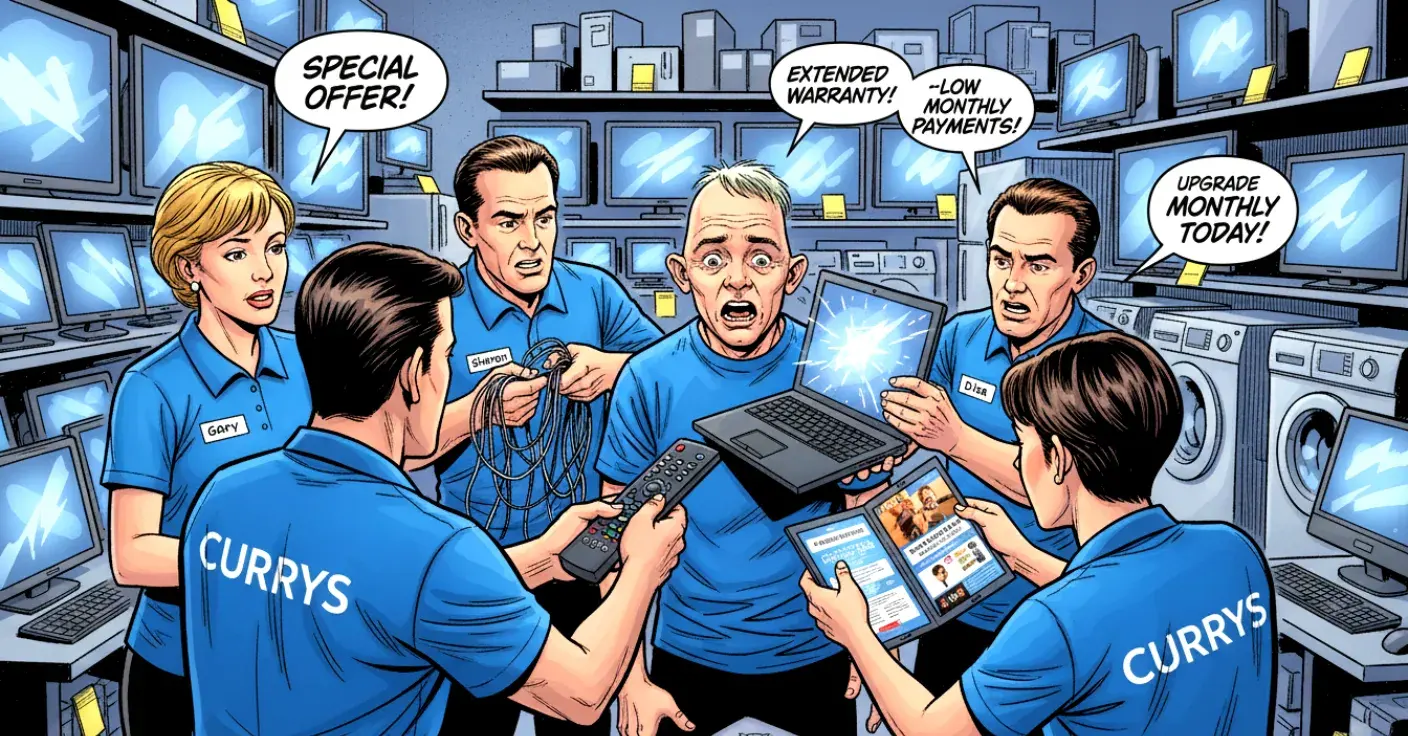
Instead, it felt as though the real sales process was only just beginning.
The Sales Pitch Starts
The first recommendation was Microsoft Office.
I politely declined.
Next came antivirus software.
Again, I declined and explained that my broadband provider already supplied McAfee free of charge as part of my package.
That didn't seem to make much difference.
I was told that the version sold by Currys included extra protection for online banking and was therefore worth buying. I repeated that I wasn't interested
Eventually the assistant went to retrieve the laptop, but rather than returning promptly, she appeared to spend time rearranging shelves and displays while I stood waiting.
It felt as though I was being deliberately kept in the shop for longer than necessary in the hope that I'd eventually agree to buy something extra.
The Bit That Really Frustrated Me
When the laptop finally appeared, I thought the whole process was coming to an end.
Instead, I was asked to sit down at a nearby desk to "go through a few things".
I explained that I was on my lunch break and didn't have time for a consultation. I just wanted to pay for the laptop and get back to work.
She reluctantly agreed to walk over to the tills. But even then, before I could pay, the sales pitch continued.
The Repair & Support Plan
First came a lengthy explanation of the Currys Repair & Support Plan, covering repairs, health checks and accidental damage protection.
I said no.
The Setup Service
Next came a paid setup service, including assistance getting started and creating a recovery USB drive.
I said no again.
By this stage I had been in the store for around twenty minutes, despite already reserving the product online and making it clear that I wasn't interested in extras.
Only after several refusals was my payment finally processed.
What struck me most was the noticeable change in tone from the saleswoman once it became clear that I wasn't going to buy any add-ons. The friendly demeanour she displayed at the start disappeared almost immediately.
It felt like a case of, "How dare you deny me my extra commission?"
Why the Add-Ons Didn't Make Sense for Me
What bothered me wasn't that these products and services were offered in the first place. I don't blame any retailer for trying to sell extras, provided they offer genuine value to the customer.
My issue was the persistence.
As someone comfortable with technology, I already knew that most of what was being offered wasn't necessary for my situation.
Antivirus Software
Modern Windows PCs already include built-in protection through Microsoft Defender, which is more than adequate for many home users.
On top of that, there are many free options available that are just as good as their paid counterparts, minus a few features.
Paying around £80 for a premium antivirus package would have been a complete waste of money for me.
Microsoft Office
The majority of people who buy a new laptop don't need Microsoft Office, and even if they do, it's often cheaper and easier to buy it directly when required.
There are also alternatives, such as Google Docs and LibreOffice, for people whose needs are fairly basic.
Repair Plans
Every new laptop comes with a manufacturer's warranty, typically for 12 months. In addition, your consumer rights may provide further protection for up to six years in many circumstances.
If you want cover for accidental damage, you're better off choosing a reputable insurance provider. In some cases, your home insurance policy may already include accidental damage cover for electrical appliances.
Spending more than £100 on a retailer's support plan was, quite frankly, a rip-off.
Setup Services
Creating a recovery drive and completing a basic Windows setup is something most users can do themselves with a little guidance.
In my view, paying £55 for a task that requires a low-cost USB stick and a bit of time felt unnecessary.
The Numbers Add Up Quickly
Looking back, what surprised me most was just how expensive the extras could have become.
Had I agreed to everything suggested, the rough additional costs would have been:
- Antivirus: ~£80
- Microsoft Office: £60–£230
- Repair & Support Plan: £110–£150
- Setup & Recovery USB: up to £55
That could have added between £305 and £515 to the cost of a £330 laptop.
In the most expensive scenario, I could have ended up spending around £849 for what was supposed to be a budget machine.
The Bigger Issue
What really stayed with me wasn't the inconvenience.
It was the thought of how someone less confident might have handled the situation.
I'm knowledgeable about computers, so repeatedly saying no wasn't difficult. But not everyone walks into an electronics shop with the same level of confidence or understanding.
An elderly customer, a first-time laptop buyer, or somebody who simply trusts the advice they're being given could easily feel pressured into spending hundreds of pounds more than they originally intended.
That's what made the experience feel uncomfortable.
What I Learned
The biggest lesson I took away from that day is that reserving a product doesn't necessarily protect you from in-store upselling.
If anything, it taught me to be far more prepared whenever buying technology.
A few simple rules now guide my purchases:
- Research what you actually need beforehand.
- Decide in advance whether you want any extras.
- Don't be afraid to say "no thank you" repeatedly.
- Learn a few basic setup tasks yourself.
- Whenever possible, consider buying online to avoid sales pressure altogether.
Why I've Never Bought From Currys Since
Some people may think that's an overreaction, but first impressions count.
My 2018 visit wasn't memorable because of the laptop itself. The laptop was fine.
What I remember is a straightforward collection turning into a drawn-out sales exercise where every stage seemed designed to sell me something else.
The experience left me feeling pressured, frustrated and eager to leave. As a result, when I've needed technology since then, I've bought it from other retailers or ordered online instead.
Could Currys have changed since 2018? Absolutely.
Would every customer have the same experience I did? Probably not.
But this is my story, and it's the reason I've never returned as a customer.
Conclusion
What should have been a quick lunchtime collection in 2018 became one of the most frustrating retail experiences I've had. Instead of simply collecting a reserved laptop, I found myself repeatedly declining products and services I neither needed nor wanted.
The experience taught me an important lesson: when buying technology, it's worth knowing exactly what you want before you walk through the door.
A bit of preparation can save you a significant amount of money, a great deal of time, and, in my case, enough frustration to ensure you never shop there again.